

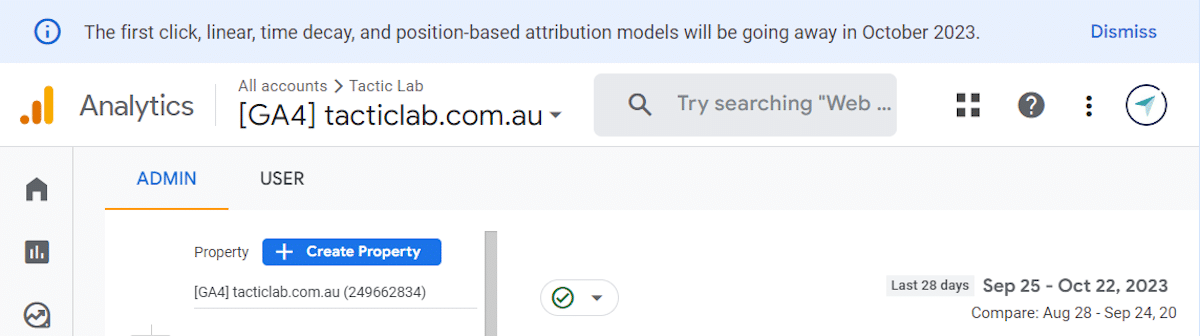
If you’ve been inside the GA4 interface lately, you’ve probably seen a message at the top that says “The first click, linear, time decay, and position-based attribution models will be going away in October 2023”:
We wanted to briefly explain what this means.
An attribution model is an attempt to answer the question “how do we assign credit for conversions to different marketing channels given that our users might be visiting our website many times before they convert?”
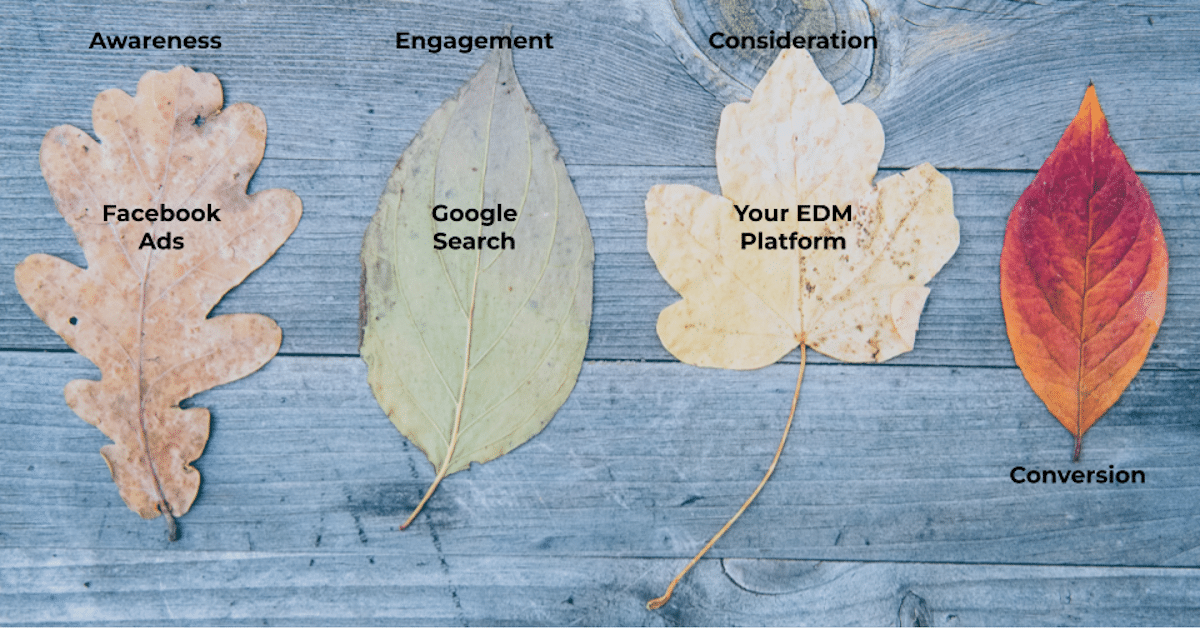
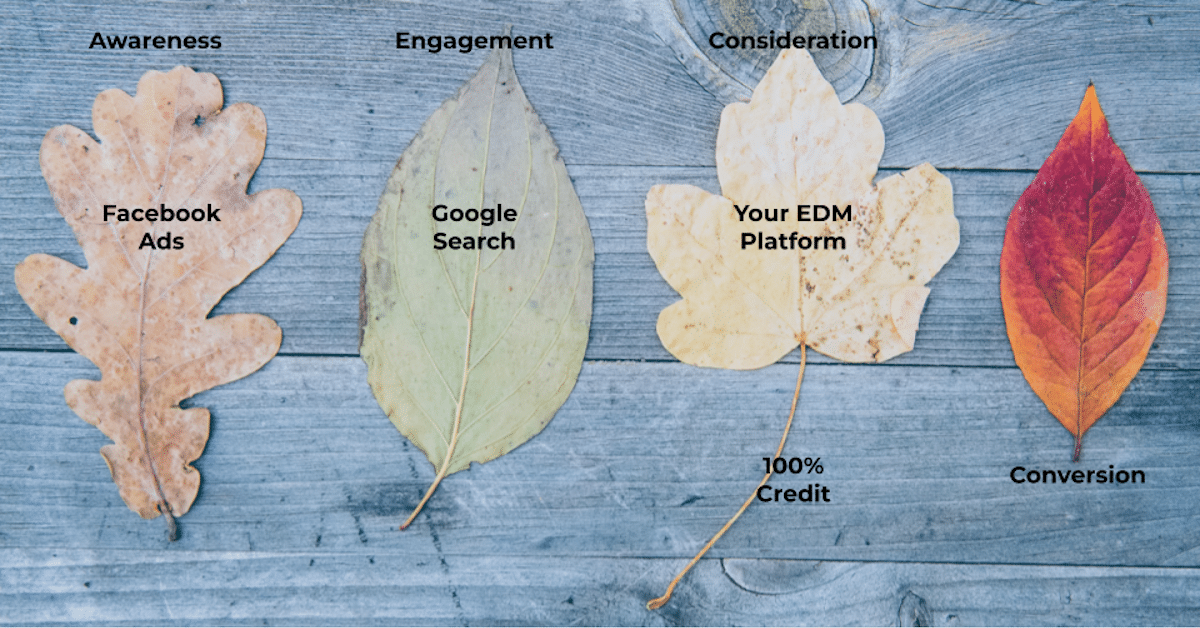
In Universal Analytics the default model was last click, meaning the channel that drove the click where the user converted got 100% of credit. This essentially threw away any other historical data meaning your conversion reports would be very biased to channels that reach already warm leads (eg. branded keyword campaigns).
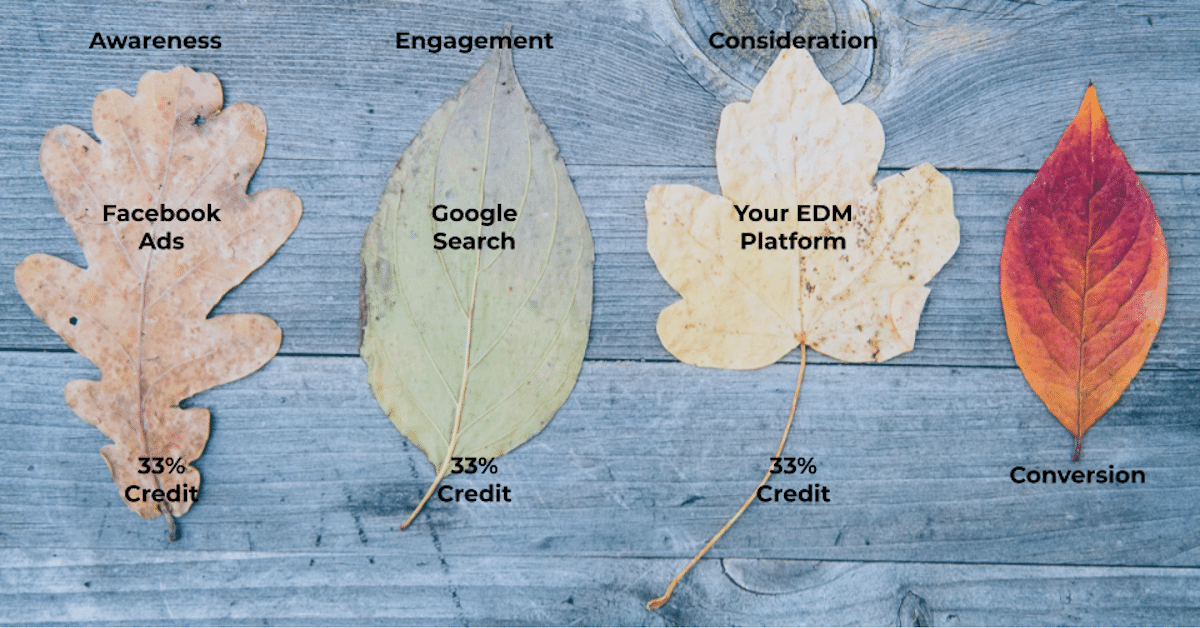
To combat this, Google introduced other models (first click, linear etc), which distribute credit in other ways. These are generally better but they still make assumptions about the user journey that might not hold these days. For example the linear model assumes that each marketing channel is equally valuable in convincing someone to convert.
Google also created its data-driven attribution model, which attempts to use machine learning to allocate credit to marketing channels that are most likely to have contributed to the conversion, across your own visitors’ journeys — but this was only available to GA Premium users.
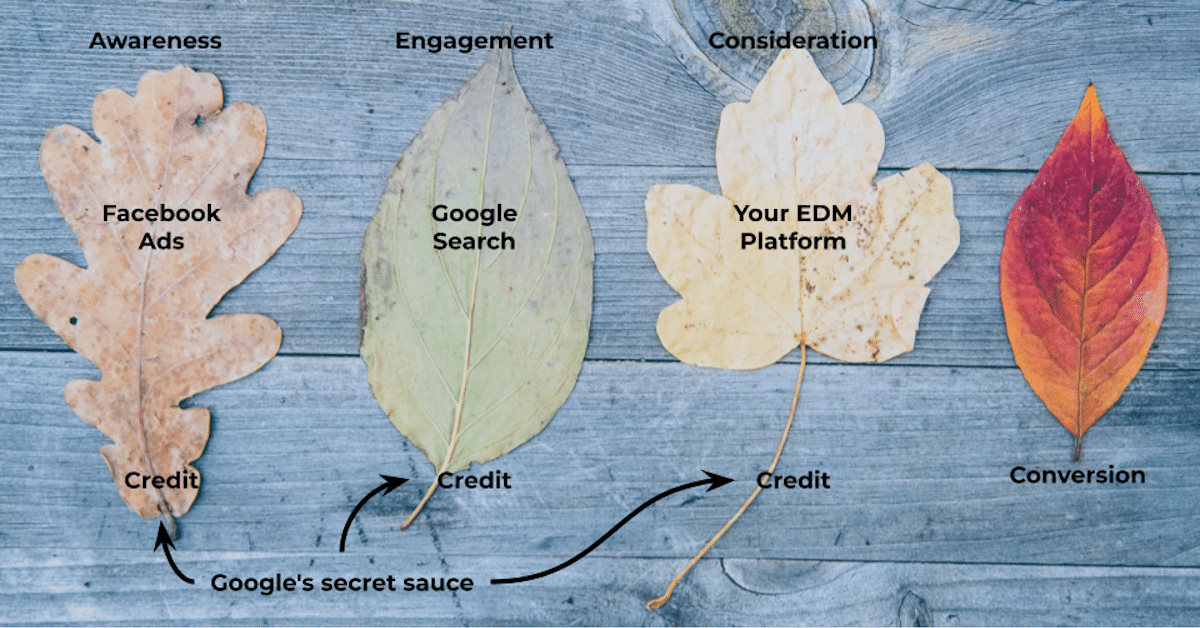
With GA4, they have made this model free and the default, so your GA4 reports already take multiple user journeys into account. However, data-driven attribution is a black box, nobody knows how or why it gives certain channels credit. Google’s removal of the other options is, we believe, their attempt to streamline orgs to using what they believe is the best practice attribution model.
If you want to keep using some of these discontinued attribution models, it’s still possible in BigQuery but is pretty complex and easy to get wrong. We’d generally recommend this only for large organisations with significant enough marketing spends and GA4 datasets to make this worth the effort and potential pitfalls.

